Case study · 04 of 11
Brand refresh for a shelf that was getting too crowded
A long-term brand strategy built to simplify choice at shelf.
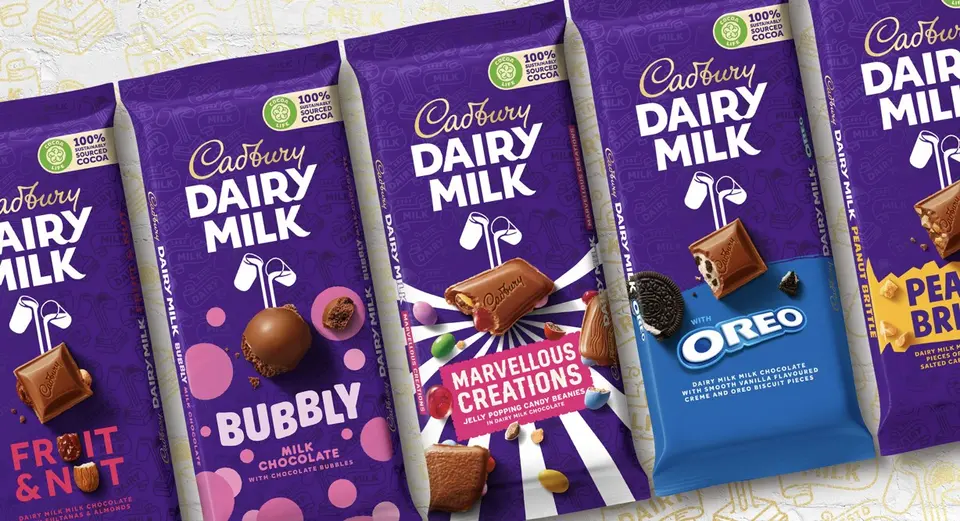
01 — The challenge
Too many pack variations were making a simple decision feel complicated.
02 — What we did
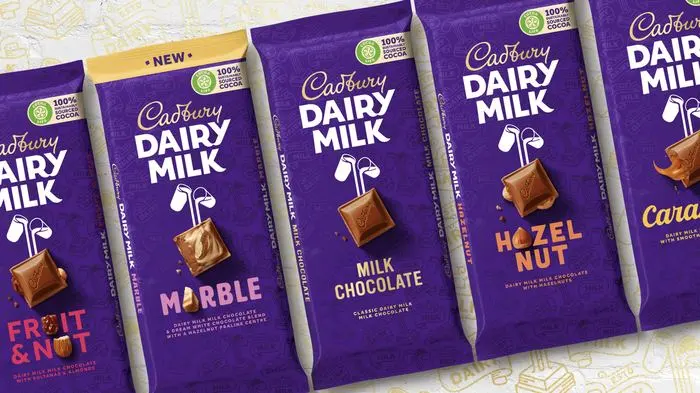
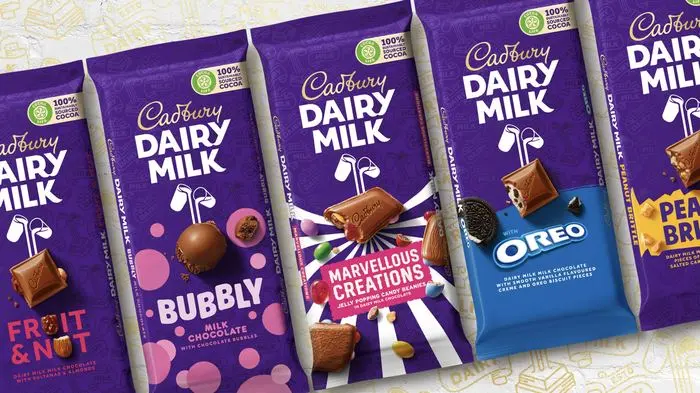
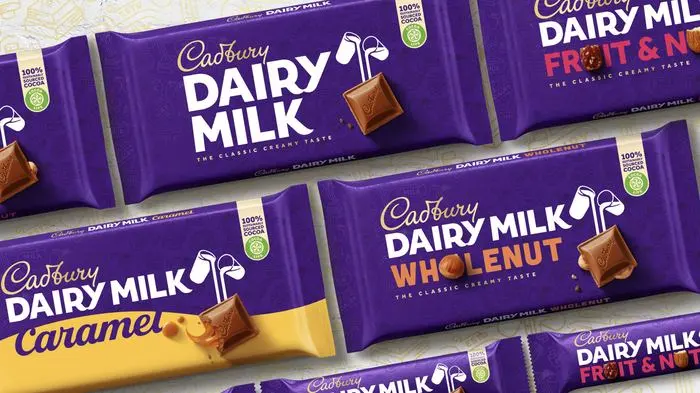
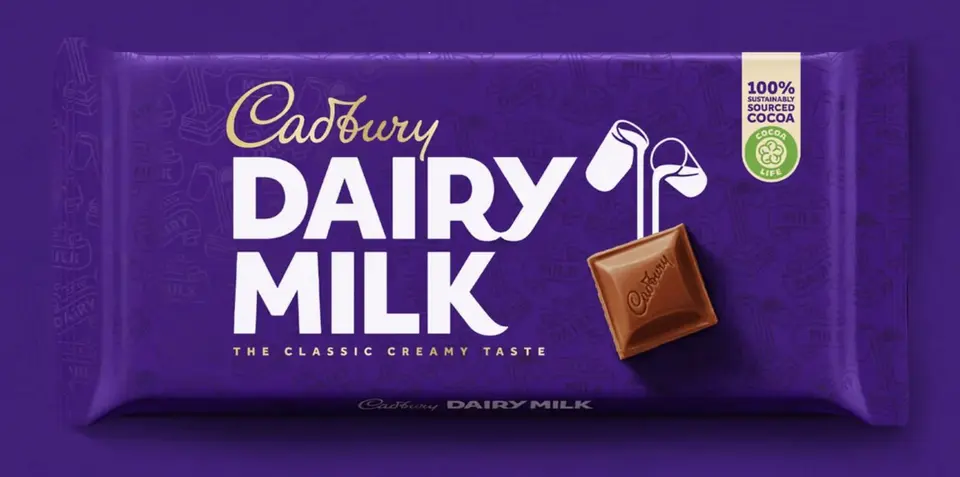
- The brand refresh to master brand assets was based on refreshing the brand and remembering what was true to the brand's core. Hence, stripping away the layers built up over the years and highlighting the heritage of the brand — the family name and signature, heritage purple, and our glass and a half.
- Then we focused on unifying the product packaging strategy, as a two-part process.
- Walk down the confectionery aisle and the decision should be instant. Unifying the range around one consistent brand architecture means every variant reads as unmistakably Cadbury before a shopper even registers the flavour name.
- Confectionery is one of the fastest-growing categories in emerging markets, with new brands launching into an increasingly crowded field — nowhere more so than South America, where category growth is outpacing established brand infrastructure. Our work with Cadbury reflects the kind of long-term packaging and brand-architecture thinking that category demands, and it's exactly the expertise growth-stage confectionery brands in these markets are looking for as they scale.


Common questions
What is brand architecture in confectionery packaging?
It's the system that lets a whole product range — dozens of variants — read as instantly recognisable as one brand, without each pack fighting for attention against its own siblings on shelf.
Does Enterpresent have confectionery brand experience relevant to South America?
Yes — Cadbury (and Toblerone) reflect deep confectionery brand strategy expertise, directly relevant to the fast-growing, increasingly competitive confectionery category forming across South America.